
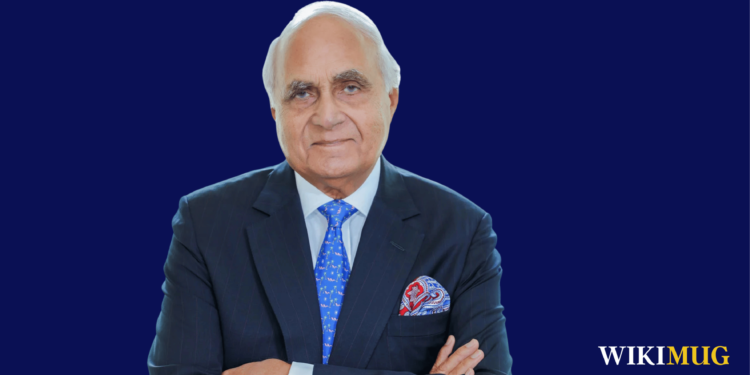
Kushal Pal Singh did not simply build a real estate company. He helped change the geography of Indian business. Under his leadership, DLF moved beyond Delhi’s established urban centres and developed a large-scale vision for what would become Gurugram.
The idea was bigger than constructing homes. Singh backed integrated urban development, combining residential communities with offices, retail spaces and supporting infrastructure. DLF’s development of Gurugram eventually helped turn the city into one of India’s major corporate destinations.
Quick Overview
| Field | Details |
| Born | August 15, 1931 |
| Age | 95 years (as 2026) |
| Birthplace | Bulandshahr, Uttar Pradesh |
| Profession | Businessman, Former Army Officer |
| Known For | Building DLF into a major Indian real estate company |
| Company | DLF |
Early Career and Entry Into Real Estate
From Manufacturing to Real Estate
Kushal Pal Singh was born in Bulandshahr, Uttar Pradesh, in 1931. After graduating in science from Meerut College, he went to the UK for higher studies in aeronautical engineering.
His career then took an unexpected turn. Singh was selected for the Indian Army through the British Officers Services Selection Board and trained at the Indian Military Academy in Dehradun. He was commissioned into The Deccan Horse and served in the Army until 1960.
After leaving the military, Singh moved into the corporate sector and joined American Universal Electric Company. He also became involved in Willard India, a battery-manufacturing venture, before his career eventually brought him to DLF.
Joining DLF
DLF was established in 1946 by Chaudhary Raghvendra Singh, Kushal Pal Singh’s father-in-law. The company’s early development focused on creating residential colonies in Delhi.
Singh joined DLF Universal after the merger involving American Universal Electric Company in 1979 and became Managing Director. By then, he was looking beyond Delhi’s established markets and thinking about where the capital’s next phase of urban growth could take place.
How Kushal Pal Singh Built DLF
The Vision for Gurugram
The answer lay across the border in Haryana. Gurugram, then commonly known as Gurgaon, did not initially resemble the corporate city it would later become. Singh saw potential in planned development outside an increasingly congested Delhi.
DLF began developing DLF City Gurugram in 1985. Instead of treating the project as a collection of individual properties, the company pursued an integrated township model that brought residential and commercial development together.
The approach reflected a larger idea: real estate development could help create an urban ecosystem. The goal was not only to build homes but also to create spaces where people could live, work and access commercial services.
Building Commercial Infrastructure
As Gurugram developed, DLF expanded beyond residential projects. The company entered Grade A office development in the city in 1999 and began developing DLF Cybercity in 2003.
Cybercity became a major office destination and helped strengthen Gurugram’s position among multinational companies and large Indian businesses. The growth of commercial spaces also created demand for supporting retail, residential and lifestyle infrastructure.
DLF also describes Singh’s “Partners in Progress” model as an approach that involved the farming community in housing and urban development. This became part of the company’s broader development strategy.
Creating a New Business District
The growth of DLF’s commercial projects gradually changed the character of Gurugram. Office spaces, residential communities and retail destinations began developing around one another, creating a more connected business environment.
Later developments, including CyberHub and DLF Mall of India, expanded this model into commercial and retail spaces. Together, these developments contributed to Gurugram’s emergence as a major destination for companies, professionals and consumers.
Gurugram’s transformation was not the result of one developer alone. Government decisions, infrastructure investment, other developers and the arrival of major businesses also played important roles. DLF, however, became one of the major developers shaping the city’s commercial landscape.
Kushal Pal Singh’s Business Approach
Long-Term Thinking
One of Singh’s defining approaches was to look beyond individual real estate projects. Instead of focusing only on immediate property sales, DLF invested in larger developments that could grow with the surrounding city.
That long-term thinking was particularly visible in Gurugram. DLF entered the market when the area had not yet developed into the corporate centre it would later become. The strategy depended on anticipating future demand rather than simply responding to an established market.
Focus on Large-Scale Development
Singh also pushed DLF toward large-scale development across multiple real estate segments. The company expanded from residential projects into offices, commercial spaces and organised retail.
This approach gradually changed DLF from a traditional housing developer into a broader real estate business. The company now operates across residential, commercial and retail segments, reflecting the larger development model that took shape under Singh’s leadership.
Legacy of DLF and Gurugram
Kushal Pal Singh’s business legacy is closely connected with the transformation of Gurugram. His contribution was not simply about the number of properties developed, but about creating integrated districts where residential, commercial and retail activity could develop together.
Gurugram eventually became home to major technology companies, multinational corporations, financial services firms and corporate offices. DLF was among the developers that helped create the commercial infrastructure supporting this growth.
Singh’s career therefore sits at the intersection of real estate and India’s wider urbanisation story. His journey shows how a long-term bet on an emerging location can create opportunities far beyond the original real estate project.
Kushal Pal Singh Today
At 95, Kushal Pal Singh remains associated with DLF as Chairman Emeritus. He stepped down as Chairman in June 2020, when his son Rajiv Singh became Chairman.
His financial standing has fluctuated with the value of DLF and his family’s holdings. Bloomberg’s 2026 billionaire profile valued his fortune at about $11.9 billion in its May 2026 update, with the calculation primarily linked to DLF holdings. Such figures should be treated as market-based estimates rather than fixed personal wealth.
Singh has also received formal recognition for his contribution to business. He was awarded the Padma Bhushan in 2010 and received EY’s Entrepreneur of the Year Lifetime Achievement Award in 2022.
Kushal Pal Singh’s rise with DLF was built around a long-term vision of real estate development. Gurugram became the clearest example of that approach, as residential, commercial and retail projects developed into a larger urban ecosystem.
For DLF, the bet helped transform the company’s scale and identity. For Gurugram, it contributed to the foundation of the corporate city it would eventually become. Singh’s story remains a case study in long-term thinking, large-scale development and the business potential of emerging markets.
FAQs
Who is Kushal Pal Singh?
Kushal Pal Singh is an Indian businessman and former army officer who built DLF into one of India’s largest real estate companies. He currently serves as Chairman Emeritus of DLF.
What is Kushal Pal Singh known for?
He is best known for DLF’s large-scale development of Gurugram and for expanding the company across residential, commercial and retail real estate.
When did Kushal Pal Singh join DLF?
Kushal Pal Singh joined DLF Universal in 1979 after the merger involving American Universal Electric Company. He subsequently became Managing Director.
What did Kushal Pal Singh do before entering real estate?
He studied aeronautical engineering in the UK and served in the Indian Army with The Deccan Horse. He later worked in the manufacturing sector before joining DLF.
Is Kushal Pal Singh still Chairman of DLF?
No. Singh stepped down as Chairman in June 2020. His son Rajiv Singh became Chairman, while Kushal Pal Singh was appointed Chairman Emeritus.
How old is Kushal Pal Singh?
Kushal Pal Singh was born on August 15, 1931. He is 95 years old in 2026.

Nikita Verma is a content writer, SEO specialist, and editor at WikiMug. She covers business, startups, entrepreneurs, success stories, biographies, and case studies. Her work focuses on in-depth research, fact-checking, and creating informative, engaging, and reader-friendly articles that make complex topics easy to understand.