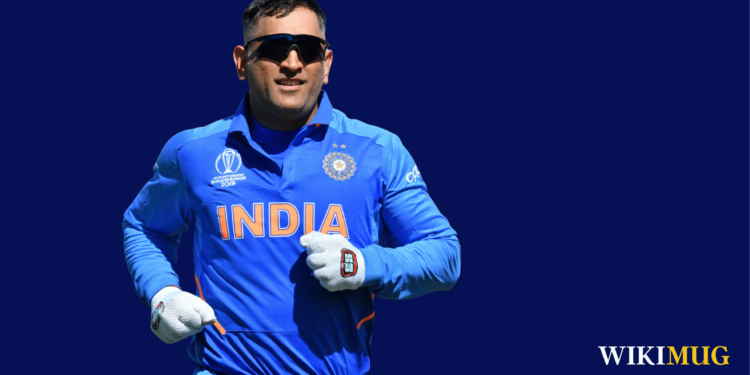
Mahendra Singh Dhoni’s journey from Ranchi to the highest levels of international cricket is one of Indian sport’s defining stories. Before he became India’s captain, World Cup winner and one of the most recognisable cricketers in the world, Dhoni played football and cricket in Ranchi’s small-town sporting circuit.
His rise was built on more than explosive batting. Dhoni developed a reputation for making clear decisions under pressure, whether behind the stumps, during a run chase or while leading India in major tournaments. That quality eventually became central to his identity as Captain Cool.
Quick Overview
| Field | Details |
| Full Name | Mahendra Singh Dhoni |
| Age | 45 years (as 2026) |
| Born | July 7, 1981 |
| Birthplace | Ranchi, Jharkhand |
| Profession | Cricketer, Former India Captain |
| Playing Role | Wicketkeeper-Batter |
| International Debut | 2004 |
| Known For | Leadership, finishing, wicketkeeping |
| Major Achievement | Winning the 2007 T20 World Cup, 2011 ODI World Cup and 2013 Champions Trophy |
| IPL Team | Chennai Super Kings |
MS Dhoni from Ranchi to the Indian Team
Dhoni’s sporting journey began in Ranchi, where he initially played football as a goalkeeper. His school cricket coach, Keshav Banerjee, recognised his wicketkeeping ability and encouraged him to take up the role. That decision eventually became one of the foundations of his cricket career.
Before entering international cricket, Dhoni worked for Indian Railways as a Ticket Collector at Kharagpur railway station. He also played domestic cricket for Bihar and later Jharkhand while continuing to pursue a professional career in the sport.
His breakthrough came in 2004 when he made his ODI debut against Bangladesh. His early international performances were not immediately spectacular, but his aggressive batting style soon changed that.
In 2005, Dhoni announced himself with a remarkable 183 not out against Sri Lanka. The innings established him as a destructive wicketkeeper-batter and gave Indian cricket a player with an unusual combination of power, finishing ability and temperament.
The Captaincy That Changed Indian Cricket
Dhoni’s leadership opportunity arrived sooner than many expected. He was appointed captain of India’s inaugural ICC World Twenty20 campaign in 2007, with a relatively young squad travelling to South Africa.
India won the tournament after defeating Pakistan in the final. The victory established Dhoni as a captain capable of handling high-pressure situations without appearing overwhelmed by them.
His leadership role expanded across formats, and his biggest achievement came four years later.
In the 2011 ICC Cricket World Cup, India defeated Sri Lanka in the final at Mumbai’s Wankhede Stadium. Dhoni finished the chase himself with a six, scoring 91 not out and becoming the first Indian captain to lift the ODI World Cup on home soil.
The moment became one of the defining images of his career. But the achievement was not built around one innings alone. Dhoni had helped lead a team capable of handling the pressure surrounding a home World Cup.
The Captain With Three ICC Trophies
Dhoni’s international leadership became historically significant because of the major ICC tournaments India won under him.
The 2007 T20 World Cup was followed by the 2011 ODI World Cup and then the 2013 ICC Champions Trophy in England.
India defeated England in a rain-affected final at Edgbaston to claim the Champions Trophy. With that victory, Dhoni became the first captain to win the three major ICC limited-overs titles: the T20 World Cup, ODI World Cup and Champions Trophy.
His captaincy was also notable for the way he used players in different roles. Rather than relying only on established names, he often backed younger players and gave them responsibility in high-pressure situations.
That approach helped shape India’s transition into a new generation of international cricket.
MS Dhoni Formula: Finishing, Wicketkeeping and Calm
Dhoni’s influence was not limited to captaincy.
As a batter, he became one of India’s most dependable finishers. His ability to calculate run chases and remain composed during the final overs became a defining part of his game.
His wicketkeeping was equally important. Dhoni developed an unusually fast glove technique, particularly when executing stumpings. His ability to read batters and react quickly added another tactical advantage to his teams.
The famous helicopter shot became one of his trademarks, but his broader contribution was more significant. Dhoni showed that a wicketkeeper could also become a world-class middle-order batter and lead a national team across formats.
MS Dhoni from International Cricket to the IPL
Dhoni’s international career eventually came to an end, but his association with competitive cricket continued through the Indian Premier League.
He became synonymous with Chennai Super Kings (CSK) after joining the franchise in the inaugural IPL season in 2008. Under his leadership, CSK developed into one of the competition’s most successful teams.
Dhoni guided CSK to multiple IPL titles and remained an important part of the franchise even after stepping away from international cricket.
His IPL career also extended his influence beyond national cricket. For a new generation of fans, Dhoni became closely associated with the yellow CSK jersey and the franchise’s culture of consistency and long-term leadership.
Building a Business Portfolio Beyond Cricket
Dhoni’s interests have also extended beyond cricket. He has been associated with brands and ventures across sports, entertainment and lifestyle.
His business interests have included SEVEN, the sportswear brand, and Dhoni Entertainment, the production company founded by him and his wife, Sakshi Dhoni.
His commercial associations have extended his public profile beyond the cricket field. However, estimates of his total personal wealth vary across media reports, and there is no publicly verified consolidated figure for his net worth.
Why MS Dhoni’s Legacy Goes Beyond the Numbers
Dhoni’s statistical record is substantial, with more than 17,000 international runs across formats and hundreds of international dismissals as a wicketkeeper. But his larger influence is harder to measure.
He helped change perceptions about where elite Indian cricketers could come from. His success showed that a player from Ranchi could become one of the central figures of Indian cricket without emerging from one of the country’s traditional metropolitan cricket centres.
His career also demonstrated the value of longevity and adaptation. He moved from international cricket to franchise cricket and from captain to senior player while continuing to remain relevant to the game.
Dhoni retired from international cricket in 2020, but his connection with cricket has continued through the IPL and his wider involvement in sports and business.
That is perhaps the most lasting part of his story. Mahendra Singh Dhoni did not simply build a career around trophies. He built one around decision-making, adaptability and an ability to remain composed when the stakes were highest.
FAQs
What is Mahendra Singh Dhoni known for?
Mahendra Singh Dhoni is best known as a former Indian cricket captain, wicketkeeper-batter and one of the most successful leaders in international limited-overs cricket.
How old is Mahendra Singh Dhoni?
Mahendra Singh Dhoni was born on July 7, 1981, making him 45 years old in 2026.
Which ICC trophies did Dhoni win as captain?
Dhoni led India to victories in the 2007 ICC World Twenty20, 2011 ICC Cricket World Cup and 2013 ICC Champions Trophy.
When did Dhoni retire from international cricket?
Dhoni announced his retirement from international cricket on August 15, 2020.
Which IPL team is associated with Dhoni?
Dhoni has been closely associated with Chennai Super Kings, whom he captained for most of his IPL career and led to multiple IPL titles.
What is Dhoni’s net worth?
There is no officially verified public figure for Dhoni’s total personal net worth. Media estimates vary, so any specific number should be treated as an estimate rather than confirmed wealth.