
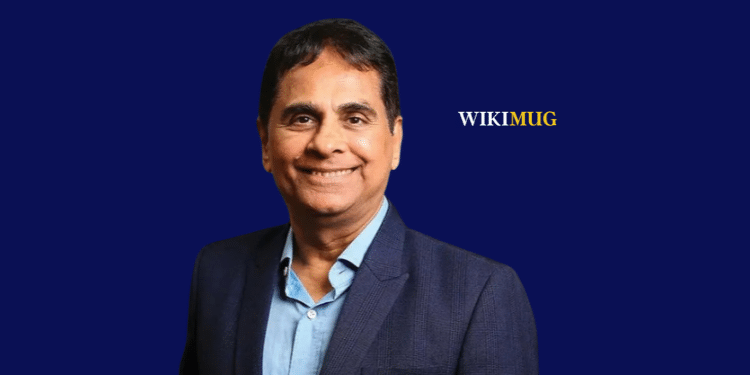
Some investors attract attention not because of how frequently they trade, but because of the businesses they choose to invest in. Vijay Kedia is one such investor in the Indian stock market.
His publicly disclosed investments are closely followed by retail investors, particularly those interested in small-cap and mid-cap companies. The Vijay Kedia portfolio 2026 has drawn attention following disclosures involving companies such as Websol Energy, Iware Supplychain Services and Sattrix Information Security.
However, a shareholding disclosure tells only part of the story. It does not reveal an investor’s complete research process, purchase price or future investment plans.
This article examines Kedia’s latest publicly disclosed holdings, notable portfolio developments, his SMILE investment framework and the factors investors should consider before researching stocks associated with him.
Vijay Kedia Portfolio 2026: Quick Overview
| Particulars | Details |
| Name | Vijay Kishanlal Kedia |
| Date of Birth | 4 November 1959 |
| Age | 67 years (as 2026) |
| Profession | Investor and businessman |
| Company | Kedia Securities Private Limited |
| Investment Approach | Long-term, business-focused investing |
| Known For | Identifying growth opportunities in smaller companies |
| Investment Framework | SMILE Strategy |
Personal Details of Vijay Kedia
Vijay Kishanlal Kedia was born on 4 November 1959 in Kolkata, West Bengal. He began participating in the stock market at the age of 19 and later established Kedia Securities in 1992. He graduated in Commerce from the University of Calcutta and has built a career as an investor and businessman. Kedia is known for studying management quality, business potential and long-term growth opportunities when evaluating companies.
Vijay Kedia Portfolio 2026: Latest Stock Holdings
Investors often track Vijay Kedia’s portfolio to understand which companies and industries have attracted his attention. His publicly disclosed investments include businesses from sectors such as automobiles, pharmaceuticals, engineering, renewable energy, logistics and technology.
According to Trendlyne’s shareholding data for 30 September 2026, Vijay Kishanlal Kedia had publicly disclosed holdings in 26 stocks, with an estimated combined market value of approximately 1,341.03 crore.
The following table highlights selected holdings from the September 2026 data. It is not intended to represent every stock in the portfolio.
| Company | Sector | Disclosed Holding | Holding Entity |
| Atul Auto | Automobiles | 20.9% combined | Vijay Kedia and Kedia Securities |
| Neuland Laboratories | Pharmaceuticals | 1.0% | Kedia Securities |
| Websol Energy System | Solar Manufacturing | 1.19% | Vijay Kedia |
| Iware Supplychain Services | Logistics | 10.4% combined | Vijay Kedia and Kedia Securities |
| Sattrix Information Security | Cybersecurity | 8.1% | Kedia Securities |
| Exato Technologies | IT Services | 11.4% combined | Vijay Kedia and Kedia Securities |
| Ashutosh Fibre | Textiles | 4.7% | Vijay Kedia |
The holdings represent different business models and levels of ownership. Atul Auto, for example, operates in the automobile industry, while Neuland Laboratories is involved in pharmaceuticals. Websol Energy provides exposure to solar manufacturing, and Iware Supplychain operates in logistics.
The percentages also need to be interpreted carefully. A larger ownership percentage does not automatically mean a stock represents a larger investment by market value. The company’s total equity value and the number of shares held also matter.
Do Publicly Disclosed Holdings Show the Entire Portfolio?
Not necessarily.
Under applicable Indian shareholding disclosure requirements, listed companies report their shareholding patterns periodically. Public shareholders holding 1% or more are identified by name in the relevant disclosures. Smaller holdings may not appear as individually named entries in the same way.
Investments held through different entities can also be reported separately. For example, Atul Auto’s September 2026 disclosed holding includes approximately 18.2% under Vijay Kedia’s name and 2.7% under Kedia Securities.
Similarly, Iware Supplychain Services shows separate holdings under Vijay Kedia and Kedia Securities. Investors should check the names of the disclosed shareholders before combining percentages.
Portfolio trackers are useful for understanding publicly reported positions, but they should not be treated as a complete record of every investment owned by an individual.
Recent Changes in Vijay Kedia Portfolio 2026
Quarterly shareholding patterns help investors identify positions that have become newly visible, increased, declined or remained broadly unchanged.
Data highlights several notable developments:
- Websol Energy: Vijay Kedia’s disclosed holding increased from approximately 1.10% in June to 1.19% in September 2026.
- Iware Supplychain Services: A combined disclosed holding of approximately 10.4% appeared under Vijay Kedia and Kedia Securities.
- Sattrix Information Security: Kedia Securities appeared with a disclosed holding of approximately 8.1%.
- Exato Technologies: The combined disclosed holding under Vijay Kedia and Kedia Securities was approximately 11.4%.
- Ashutosh Fibre: A holding of approximately 4.7% appeared under Vijay Kedia’s name.
A newly visible position does not always mean that the investor purchased the shares during that particular quarter. It may also mean that a holding crossed the public disclosure threshold or became visible following a corporate transaction.
Likewise, a change in percentage ownership may result from a change in the number of shares held or a change in the company’s total share capital.
To understand what actually happened, investors should compare consecutive quarterly shareholding patterns and read relevant company announcements. The shareholding pattern alone may not explain the reason behind a change.
Vijay Kedia’s Websol Energy Investment
Websol Energy System Limited is a solar manufacturing company that produces solar photovoltaic cells and modules. Its business is connected to the wider development of renewable energy and domestic solar manufacturing in India.
The company attracted attention from investors tracking Vijay Kedia’s portfolio after his disclosed shareholding increased between the June and September 2026 reporting periods.
- June 2026 disclosed holding: approximately 47.85 lakh shares, or 1.10%.
- September 2026 disclosed holding: approximately 51.55 lakh shares, or 1.19%.
This represents an increase of approximately 3.70 lakh shares between the two reporting dates.
The change is notable, but it is important to distinguish between an increase in disclosed shares and confirmation of the exact transaction through which those shares were acquired. Investors should consult company announcements and exchange filings before describing the movement as a particular type of purchase.
What Should Investors Examine About Websol Energy?
India’s renewable energy industry has created opportunities for solar manufacturers. However, growth in the overall sector does not guarantee that every company will benefit equally.
Investors researching Websol Energy should consider several company-specific factors:
- Revenue and profitability: Whether sales growth is translating into sustainable operating profits.
- Cash flow: Whether reported earnings are supported by cash generated from operations.
- Debt and working capital: Whether the company can finance its operations and expansion without excessive financial pressure.
- Manufacturing capacity: Whether production facilities are being used efficiently.
- Competition: How the company competes with other domestic and international solar manufacturers.
- Capital expenditure: Whether planned investments can generate adequate returns.
A disclosed investment can make a company worth researching, but it does not reveal the investor’s purchase price, expected return or complete investment rationale.
Vijay Kedia’s Investment in Iware Supplychain Services
Iware Supplychain Services Limited is another company that attracted attention in 2026 following disclosures involving Vijay Kedia and Kedia Securities.
The company operates in the logistics and supply chain industry, a sector that supports manufacturers, retailers and other businesses through transportation, distribution and related services.
According to September 2026 shareholding data, the disclosed holdings were:
| Shareholder | Shares Held | Approximate Stake |
| Vijay Kedia | 3,45,600 | 3.0% |
| Kedia Securities Private Limited | 8,46,000 | 7.4% |
| Combined | 11,91,600 | 10.4% |
The distinction between individual and company holdings matters when analysing the portfolio. Financial websites may display the investments of Vijay Kedia and Kedia Securities separately, even when readers are interested in their combined exposure.
An Iware company filing dated 30 April 2026 also recorded a proposed preferential allotment of 3,45,600 shares each to Dr. Vijay Kedia and Kedia Securities Private Limited. That announcement provides useful background to the investment, while subsequent shareholding disclosures are needed to establish the reported quarter-end position.
What Should Investors Check About Iware?
Logistics companies can benefit from developments such as e-commerce expansion, manufacturing growth and demand for efficient distribution networks. But industry growth alone is not enough to assess an individual business.
Investors researching Iware should examine its revenue growth, operating margins, cash flow, borrowings, customer base and working-capital requirements.
Receivables and cash collection are particularly important in businesses where expansion can require significant operating resources. Strong revenue growth does not automatically indicate that a company is financially healthy.
How to Analyse Stocks in Vijay Kedia’s Portfolio
The market value of a disclosed portfolio does not tell the entire story. Individual holdings can perform very differently, and a portfolio’s estimated value may change because of share-price movements, purchases, sales or changes in reported shareholdings.
Investors researching the stocks should assess the underlying businesses rather than assuming that every holding has performed equally well.
Five factors can help put a company’s performance into context.
One-Year and Three-Year Returns
One-year returns show how a stock has performed recently, while a three-year comparison provides a broader view across different market conditions.
Comparisons should use the same end date and adjusted share prices to account for corporate actions such as stock splits and bonus issues.
Revenue and Profit Growth
Investors should examine whether a company is consistently growing revenue and improving profitability.
They should also check whether profit growth is supported by operating cash flow. Higher reported profits accompanied by weak cash generation may indicate collection or working-capital issues.
Valuation
A company can have attractive business prospects but still trade at an expensive valuation.
Measures such as the price-to-earnings and price-to-book ratios can provide context. They should be considered alongside the company’s growth prospects, financial position and comparable businesses.
Comparison with Market Benchmarks
A stock’s performance is more meaningful when compared with an appropriate benchmark.
For example, an automobile company may be compared with a relevant automobile-sector index as well as a broader market index. This helps investors understand whether the stock has outperformed or underperformed its industry.
Portfolio Value Versus Investment Return
An investor who purchased a stock several years ago may have a very different cost price from someone buying it today.
Public shareholding data generally does not reveal the complete purchase history, realised gains or unrealised returns of an investor. A rise in estimated portfolio value should therefore not automatically be interpreted as the actual return earned during that period.
Understanding Vijay Kedia’s SMILE Investment Strategy
One of the most discussed aspects of Vijay Kedia’s investment approach is the SMILE framework.
SMILE is commonly expanded as:
- S – Small in Size
- M – Medium in Experience
- I – Large in Aspiration
- L – Extra-large in Market Potential
The framework focuses on identifying smaller companies with experienced management, ambitious plans and the opportunity to operate in a much larger market.
Small in Size
Smaller companies may have room to expand their operations, enter new markets or introduce additional products.
However, they can also have limited financial resources, lower trading liquidity and greater sensitivity to changes in business conditions.
Medium in Experience
Management experience matters because a promising industry does not guarantee successful execution.
Investors should examine the leadership team’s industry knowledge, business decisions, governance standards and communication with shareholders.
Large in Aspiration
A company’s plans may include increasing manufacturing capacity, entering new markets, launching products or developing customer relationships.
Investors should assess whether these plans are realistic and supported by the company’s financial resources and execution capabilities.
Extra-large in Market Potential
A smaller company may have significant room to grow if it operates in an industry with a large potential market.
The important question is whether the business can compete effectively and capture a meaningful share of that opportunity.
SMILE can be used as a starting point for company research. It should not replace an examination of financial statements, valuations, governance and risk.
Market Cycles and the Importance of Patience
Stock markets move through different phases. During rising markets, optimism can push valuations higher. During corrections and bear markets, share prices can fall even when a company’s underlying business has not changed significantly.
These movements can be especially pronounced among small-cap and mid-cap stocks. Investors therefore need to distinguish between a change in market sentiment and a change in business fundamentals.
Kedia’s publicly discussed investment approach places importance on understanding businesses and giving investment ideas time to develop. His SMILE framework also highlights the role of management quality and market opportunity.
Patience, however, should not mean holding a stock regardless of what happens. Investors need to review whether the original reasons for buying a company remain valid.
A useful review should ask:
- Is the company’s business still performing as expected?
- Has its competitive position changed?
- Are revenue, profitability and cash flow developing sustainably?
- Has management delivered on its stated plans?
- Does the current valuation still justify the investment?
A falling share price does not automatically make a stock attractive. Equally, a rising share price does not necessarily mean that the business has become stronger.
Vijay Kedia Net Worth in 2026
Vijay Kedia net worth is a topic that frequently attracts interest from stock market followers.
The estimated market value of his publicly disclosed listed stock holdings was approximately 1,341.03 crore.
This figure should not be treated as his verified total personal net worth.
A complete personal wealth calculation would need to account for assets and liabilities that may not be visible in public shareholding patterns. These could include private investments, property, other financial assets and outstanding liabilities.
There is also a timing difference. Listed shares trade on the stock market, so their estimated value can change every trading day. Portfolio trackers may update their figures when new shareholding information becomes available.
It is therefore more accurate to describe 1,341.03 crore as the estimated value of publicly disclosed listed holdings included in the tracker, as of its stated reporting date, rather than as Vijay Kedia’s complete personal wealth.
What Retail Investors Can Learn from Vijay Kedia’s Portfolio
Following an experienced investor’s portfolio can help readers discover companies they may not have considered. The more useful exercise, however, is to investigate the businesses rather than automatically copying disclosed positions.
Four practical principles can help:
Understand How the Company Makes Money
Examine the company’s products or services, customers, competitive position and sources of revenue. If the business model is difficult to understand, further research may be necessary before investing.
Check Management and Governance
Review the leadership team’s track record, company disclosures, related-party transactions and use of shareholder capital.
Read the Financial Statements
Look beyond headline revenue growth. Assess margins, cash flow, borrowings, working capital and return on capital to understand the company’s financial position.
Consider Valuation and Risk
A promising business can still be a poor investment at an excessive price. Small-cap and SME shares may also involve lower liquidity and greater price volatility.
A disclosed holding can be a research lead, but it is not a buy signal. Public information does not reveal an investor’s complete research process, purchase price or future intentions.
Frequently Asked Questions (FAQs)
What is Vijay Kedia’s portfolio in 2026?
Vijay Kishanlal Kedia had publicly disclosed holdings in 26 stocks, with an estimated combined market value of approximately 1,341.03 crore. The portfolio value changes with market prices and reporting updates.
What is Vijay Kedia’s date of birth and age?
Vijay Kedia was born on 4 November 1959. He is 66 years old as of 30 October 2026.
Which stocks has Vijay Kedia bought recently?
Websol Energy as a holding where his disclosed stake increased between June and September 2026. The data also shows newly visible positions in companies including Iware Supplychain Services, Sattrix Information Security and Ashutosh Fibre. Investors should check company filings to understand the nature and timing of each transaction.
Which solar stock is associated with Vijay Kedia?
Websol Energy System Limited is the solar manufacturing company associated with his disclosed holding. A holding of approximately 1.19%, compared with 1.10% in June 2026.
What is Vijay Kedia’s SMILE strategy?
SMILE is commonly expanded as Small in Size, Medium in Experience, Large in Aspiration and Extra-large in Market Potential. It describes an approach to identifying smaller businesses with experienced management, ambitious plans and significant market opportunities.
What is Vijay Kedia’s net worth in 2026?
Trendlyne estimated the value of his publicly disclosed listed stock holdings at approximately 1,341.03 crore as of September 2026. This figure should not be confused with his complete personal net worth.
What is Vijay Kedia’s investment in Iware Supplychain Services?
September 2026 shareholding data shows approximately 3.0% under Vijay Kedia’s name and 7.4% under Kedia Securities Private Limited. Together, the disclosed holding was approximately 10.4%.
Is Vijay Kedia a long-term investor?
His publicly discussed investment approach places importance on business fundamentals, management quality and patience. However, investors should not assume that every stock in his portfolio is held for the same period.
Conclusion
Vijay Kedia’s publicly disclosed investments offer a starting point for exploring companies across different industries. The holdings in Websol Energy, Iware Supplychain Services, Atul Auto and other businesses provide different themes for investors to research.
His SMILE framework highlights the importance of company size, management experience, ambition and market opportunity. These ideas can help investors structure their research, but they do not remove the need to examine financial performance, valuation and risk.
For retail investors, the real value of following a disclosed portfolio lies in learning how to evaluate businesses independently—not simply copying another investor’s holdings.
Disclaimer: This article is for educational and informational purposes only. It does not constitute financial advice or a recommendation to buy or sell any security. Shareholding information is based on publicly available disclosures and third-party data, which may change or contain reporting delays. Investors should conduct their own research or consult a qualified financial adviser before making investment decisions.

Nikita Verma is a content writer, SEO specialist, and editor at WikiMug. She covers business, startups, entrepreneurs, success stories, biographies, and case studies. Her work focuses on in-depth research, fact-checking, and creating informative, engaging, and reader-friendly articles that make complex topics easy to understand.